Top World News


'Not an accident': Marco Rubio sends shockwaves with ominous 'coup' comment
Secretary of State Marco Rubio publicly invited Cubans to work with the CIA on Friday, and the reaction across the political spectrum was immediate.“To those who seek to create positive change in Cuba - now is the time,” Rubio wrote on X. “The disappointment of failed promises, corruption, and the privileged lives of only a few; seize this opportunity to create the change you desire through a discrete partnership with the CIA.”A few hours later, the CIA’s official account posted the same message in Spanish. It included a video ending with the words “Contacte a la CIA” (“Contact the CIA”).Many people were stunned that the message was public at all.“Rubio is just putting this out on main,” wrote Ryan Grim, a reporter at Drop Site News and co-host of “Breaking Points.”Ben Rhodes, who was deputy national security adviser to President Barack Obama, wrote that “‘Please help us coup’ is a logical endpoint to Rubio’s worldview.”Some on the left said the post confirmed what they’d long argued about U.S. policy toward Latin America.“Good to see the State Dept lifting the mask of diplomacy and exposing itself as cover for malign CIA destabilization ops aimed at installing puppet governments,” wrote Max Blumenthal, editor of The Grayzone.Journalist Ben Norton, editor of Geopolitical Economy Report, called Rubio a “warmonger” who is “publicly asking Cubans to help the CIA organize a coup attempt.”“The US empire used to organize its many coups in secret,” Norton wrote. “Now it puts job postings for treasonous CIA coup-plotters on Twitter.”Australian writer Caitlin Johnstone predicted that anyone who later blames the CIA for unrest in Cuba will “STILL get called a crazy conspiracy theorist” after the agency said it “right out in the open.”Plenty of Trump allies loved it.“Cuba Libre!” wrote Monica Crowley, a longtime Trump ally and former administration official.“‘Create the change you desire through a discrete partnership with the CIA,’” wrote conservative national security commentator David Reaboi. “I want the t-shirt.”Fox News contributor Katie Pavlich responded with a pair of eyes emojis.Jacob Creech, a pro-Trump influencer who posts as “Clandestine,” tied the post to a recent comment from President Donald Trump about Cuba.“Yup, that comment from Trump about Cuba was not an accident,” Creech wrote. “We are going to be cleansing Cuba, which has been a Deep State/CIA hotspot for decades.”The State Department and the CIA didn’t specifically say what kind of “partnership” they were offering.

Whistleblower CEO quits over hidden Russian cash behind gas deal in Trump peace talks: NYT
A gas venture that came up in President Donald Trump's Ukraine peace talks had a hidden backer, according to its former boss.Polar LNG, a startup pitching a plan to export natural gas from Alaska's North Slope, received secret funding from Russian energy giant Novatek, The New York Times reported Friday. Joel Riddle, who ran the company until he resigned in September, told the Times he was misled into believing the money came from a firm in the United Arab Emirates.Russian President Vladimir Putin discussed the project last month with Trump envoys Steve Witkoff and Jared Kushner, people familiar with the negotiations told the Times. White House officials see energy deals like it as a way to smooth relations with Moscow."It's not only unlawful, but it's not in the U.S. interest," Riddle told the Times. Novatek, which is under partial U.S. sanctions, was already set to supply the project's technology.Text messages reviewed by the Times show Novatek deputy chairman Denis Solovyov and chief executive Leonid Mikhelson discussed sending as much as $15 million to Polar LNG's Abu Dhabi parent company, Tech Wave, to keep the effort going. "The first 5 million were supposed to arrive by today," Solovyov wrote to Riddle in early September.In a statement to the Times, Novatek said it was moving to become a "minority shareholder" in the project. Polar LNG named Tim Talkington acting chief executive and called Riddle a "disgruntled former employee" who was fired for cause. Documents obtained by the Times show Riddle resigned six days before the company sent him a termination letter.Memos from law firm Baker Botts, attached to Riddle's resignation letter, said Treasury Department sanctions enforcers had flagged "potential Russia-related sanctions concerns." Recent sanctions legislation specifically targets Novatek, but Trump temporarily waived the law's Russia sanctions last week, saying the move was needed to keep peace talks alive.The push to bring Novatek equipment to Alaska also involved Gentry Beach, a college friend of Donald Trump Jr. who said in February he had negotiated with the Russian company. A spokesman for Trump Jr. said the two are no longer close, and Novatek said Beach played no role in its talks over a Polar LNG stake.There is no indication Witkoff or Kushner knew about Polar LNG's ties to Novatek, the Times reported. Still, Geoffrey Pyatt, a former State Department energy official under President Joe Biden, warned the idea "feeds the belief that Putin can get an out-of-jail-free card."Riddle said he and two other departing executives warned the Trump administration about the Russian financing and urged officials to investigate. The Energy Department did not respond to the Times."I felt like I did the right thing to notify authorities at the appropriate time," Riddle said.

Spy chief warns Marco Rubio lethal plots against Americans reached ‘advanced stages’
The nation's top spy has sent Secretary of State Marco Rubio an urgent warning that danger to Americans overseas is rapidly escalating.Director of National Intelligence Jay Clayton told Rubio that Iran has "substantially increased" its efforts to go after U.S. personnel, such as diplomats, and that lethal plotting against American citizens has reached "advanced stages" in the Middle East and other countries, according to an Oct. 23 memo Axios obtained and reported on Friday."The lethal plotting efforts by the Iranians against U.S. citizens have reached advanced stages in both the Middle East and certain other countries," Clayton wrote in the one-page, unclassified memo, which was also copied to CIA Director John Ratcliffe.CNN's Zachary Cohen posted on X that a U.S. official confirmed the memo is genuine and that CNN had obtained its own copy, adding that a source said its substance is broadly in line with the intelligence community's assessment.The memo doesn't name specific targets or identify which countries outside the region are involved, and it offers no details about how the plots would be carried out.Instead, Clayton stressed that the safety of government personnel abroad is "a top priority" for the administration, warning that the intelligence is "relevant to more individuals than are currently cleared to receive this information."The materials have already gone to appropriately cleared senior staff on Rubio's team, according to the memo, and Clayton pledged to downgrade as much of the intelligence as possible so Rubio can share it with State Department personnel at his discretion.U.S. officials told Axios the warning is one of the factors behind a wave of embassy drawdowns across the region. Earlier this week, the State Department directed family members and nonessential staff to depart the embassy in Riyadh along with consulates in Jeddah and Dhahran. On Friday, it ordered further personnel cuts at embassies in the United Arab Emirates, Lebanon, Qatar and Jordan, a U.S. official said."We decided that due to the threat of Houthi attacks and Iranian terror plots we need to reduce our footprint and keep only essential staff," the official told Axios.Officials also worry that Yemen's Iran-backed Houthi rebels could widen their attacks beyond Saudi Arabia, while the possibility of new U.S. and Israeli military action against Iran, potentially after the midterms, has further heightened tensions.President Donald Trump floated that very scenario at a rally in Florida on Friday. "We may do another little Operation Epic Fury, or [the Iranians] will agree [to a deal]," he said, adding, "If they're smart, they will just say, 'Let's get down to business,' but I doubt they will do that because perhaps they're not smart."CNN was the first to report the staffing reduction at the four embassies.

Archbishop scrambles to wash his hands of Trump after laying them on him: report
The Denver archbishop who led a prayer over President Donald Trump in the Oval Office is now scrambling to explain himself.Archbishop James Golka told the Denver Catholic, the archdiocese's own newspaper, on Friday that the White House's video of the Oct. 22 prayer was never meant as an endorsement, even as he defended being there and turned his fire on critics."I understand that many people saw the video, posted by the Administration twelve days before an election, as an endorsement," Golka said. "That was never my intention."The invitation came months ago, according to the archbishop, following a June session in which faith leaders pressed the administration on immigration, religious freedom and visas for religious workers. He said progress made by task forces after that meeting encouraged him to accept, even though he knew the meeting "could be shared and some might use it for political purposes."Golka said he learned only shortly before the visit that he would be the one praying over Trump. The bishops first spent three hours with the White House Faith Office discussing religious worker visas, protection of life, religious freedom and school choice."I've had a lot of people, really good friends, ask me, 'What were you doing?' 'Why did you do that?' I just answer, 'I was being a Catholic priest,'" he said.The archbishop then pointed outward. "I'm heartbroken that people are hurt, and that there are people intentionally using this moment to sow disunity. That's not a fruit of the Spirit," he said, urging Catholics to look past headlines he described as "often crafted to provoke."The fallout has reached Rome. Catholic commentator Christopher Hale reported in his Letters from Leo newsletter that a senior official at the Vatican's Dicastery for Bishops called it "a highly inappropriate meeting and insult to Pope Leo."Hale wrote that Golka's account stops short of an apology and never mentions Paula White-Cain, the televangelist and White House Faith Office adviser who stood behind Trump's chair as the bishops laid hands on him. The U.S. Conference of Catholic Bishops has said it neither organized the meeting nor has any affiliation with it.Golka closed with a pledge. "This work helps only if the Church carries the same message to leaders of both parties. We will," he said.

Bombshell report guts Marco Rubio’s claim White House ‘cannot direct’ Musk on Starlink
The Trump administration's insistence that it has no say over Elon Musk's satellite network just ran headlong into a damning new account.Reuters reported Friday that the Biden and Trump administrations both asked SpaceX several times over the years to switch its Starlink service on or off in various countries, long before this month's slowdown of Ukraine's military access. Six former senior U.S. officials described the requests to the outlet, which said they had never been reported before.The report lands two days after Secretary of State Marco Rubio insisted the decision over Ukraine's access belonged to Musk and SpaceX rather than the White House."We cannot direct a private company as to the decisions they make or not make," Rubio said Wednesday, according to Forbes.According to the former officials, Biden aides repeatedly handed SpaceX intelligence showing that the Houthis in Yemen and Hezbollah in Lebanon were using Starlink terminals that reached them through middlemen, then asked the company to find and disable them. At least some were shut down, two of the officials said. The Biden team also pressed SpaceX to widen Starlink use for Ukraine's military after Russia's 2022 invasion.Trump's own administration made similar overtures. A former senior Trump official and a second source told Reuters the administration discussed with Musk getting Starlink terminals into Iran and switched on after U.S.-Israeli strikes in June 2025 and again in February 2026.The revelations raise fresh questions about who throttled Ukraine's service. Reuters previously reported the order to throttle Starshield, the military version of Starlink, came from inside the White House, while The Wall Street Journal reported Musk made the call and Trump later phoned him to lift it.Musk himself pointed back at Washington earlier this week."Starshield systems are owned and controlled by the US government. Any limits on speed or usage are decided by the US military and ultimately (by the president of the United States)," Musk wrote.Trump said Friday he had not spoken with Musk about the issue, adding, "if there is a problem, I'll get it straightened out."Rep. Jason Crow (D-CO) warned about Washington's dependence on SpaceX."Unelected billionaires and private corporations should not decide what is in the best interest of America's national security," Crow said.Satellite industry consultant Armand Musey told Reuters that Musk is "supposed to be a business executive, with government contracts, and he's essentially making huge foreign policy decisions."Ukraine's embassy in Washington said its priority is getting the service back to normal speed "as soon as possible, as the lives of our people depend on it."SpaceX did not respond to Reuters' requests for comment.

Pete Hegseth’s office loses showdown with State Dept over troops at Paris NFL game: WaPo
Defense Secretary Pete Hegseth's inner circle waged a behind-the-scenes fight with another Cabinet department over a marquee sporting event abroad, according to a new report.The Washington Post reported Friday that Hegseth's office tried to scrap all U.S. military involvement in the NFL's first-ever game in Paris, only to reverse course after State Department officials objected.Sunday's matchup between the Pittsburgh Steelers and New Orleans Saints at Stade de France, just outside the French capital, had been slated to include dozens of service members, according to officials who spoke to the Post anonymously about internal discussions. Hegseth's team moved to pull them all following a weekend of unrest in Paris that President Donald Trump has publicly criticized.State Department officials pushed back, arguing that putting American troops on display at such a visible event carried diplomatic weight. They also told Hegseth's staff their department had not concluded that Americans or U.S. personnel in Paris faced a high risk of danger, the officials said.Hegseth's office ultimately agreed to bring back part of the military's role, including a color guard. Those ceremonial units, which carry the American and service branch flags, typically involve fewer than 10 people.Pentagon spokespeople would not say who in Hegseth's office sought to cancel the military involvement or why plans shifted so abruptly. A senior Defense Department official instead sent the Post an unattributed statement that echoed the president."The Department is supporting the NFL game in Paris this weekend amid the ongoing riots and unrest. As President Trump has said, France is really in trouble," the statement read, adding that the call "was made by the Secretary's core leadership team, not one person alone."Trump himself suggested Friday that the league should have considered pushing the game back."I would have said the NFL could have probably postponed that match if you want to know the truth, because France is really in trouble," Trump told reporters. "That's what happens when you go left."The State Department and the NFL declined to comment to the Post.Protests over school funding and living costs have spread across Paris and other French cities, prompting the State Department to warn Americans attending the game to steer clear of demonstrations. Trump has blamed the turmoil on immigration and Islam, while French President Emmanuel Macron has dismissed his remarks as "stupid."The U.S. military has taken part in other NFL games abroad this season, including in London and Melbourne, with games in Madrid and Munich still to come.


Trump's own team fears his next move will tank the global economy: report
Several senior Trump administration officials expressed fears that the president’s next move may very well send the U.S. and global economies “further cratering,” Zeteo reported Friday.According to multiple reports citing Trump administration officials, the president appears poised to renew attacks on Iran in a matter of days. Earlier this month, the Pentagon instructed U.S. Central Command to finish preparations for resuming major combat operations, and on Thursday, The Atlantic reported that President Donald Trump was “considering” authorizing “several days of strikes.”Speaking on the condition of anonymity, several senior Trump administration officials warned that such a move could prove disastrous on multiple fronts.“Several senior officials I spoke to are (to put it mildly) massively skeptical that revving Trump’s war machine back up will bring about the (supposedly) intended result of forcing the Iranian government to make significant concessions and end the war in Trump’s favor,” Zeteo’s Asawin Suebsaeng reported. “These officials also fear a further cratering of the U.S. and global economies, which have already suffered significantly during the oil crisis and other shockwaves caused by Trump’s war and Iran’s shuttering of the Strait of Hormuz. (This is to say nothing of the likelihood of a growing death toll in multiple nations, the danger to U.S. troops, and other inevitabilities if Trump keeps at it.)”Iranian officials have already made clear that a U.S. attack would be met with an immediate response, including the destruction of Middle East oil facilities, submarine communication cables and AI facilities and data centers in the region.“In the event of a war, cables, datacentres and artificial intelligence facilities could also be targeted. If the conflict breaks out again, we will have a broader plan,” said Mohsen Rezaei, secretary of Iran’s Supreme National Security Council, according to Iranian state media.“There can be no arrangement in which Iran’s economic lifelines come under attack while the economic architecture enabling those attacks is considered untouched and immune.”

India slashes cost of cancer drugs after court rules mark-ups are ‘extortion’
Case filed in 2022 by patient unable to afford medicine leads to cap on drug prices for millions who face ruin if diagnosedThe Indian government has moved to reduce the price of cancer drugs after a retired bank clerk took her case to the supreme court.From next month, 137 cancer drugs in India will be cheaper as the government tries to tackle the tragedy of poorer patients either forgoing treatment, selling land or falling into debt to meet the high cost of some medicines, which are making large profits for hospitals and pharmacists. Continue reading...
7 stunning claims from explosive book on Jared Kushner’s secret Gulf money trail
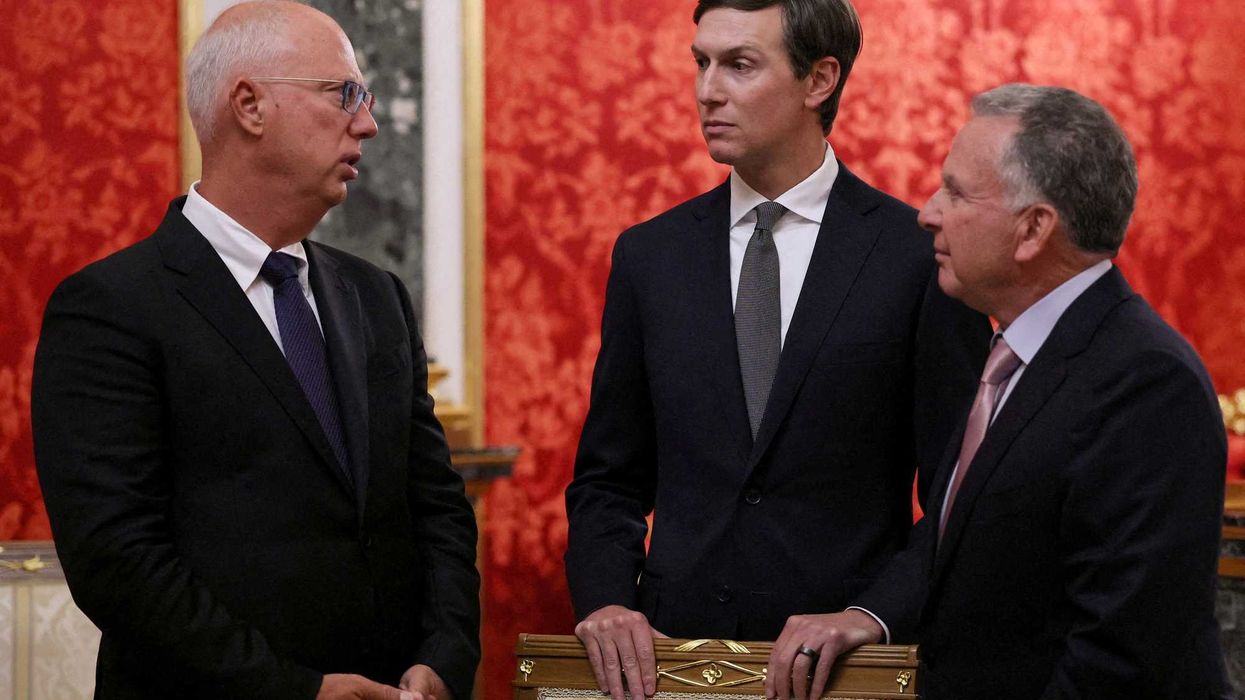
Secret accounts, alleged payments to shadowy figures, and spies watching his phone are among the bombshell claims about Jared Kushner in a new book excerpt published Thursday by Vanity Fair. First, journalist Matthew Cole alleged Gulf rulers supplied roughly $2 billion to accounts for Trump’s son-in-law, including $750 million in a charity account Kushner allegedly helped manage.Second, another $1 billion allegedly reached Israel’s central bank for his personal benefit, with Benjamin Netanyahu requiring advance notice of transactions.Third, Cole also recounts a source’s allegation that Kushner transferred money to “a warlord, a mercenary and a one-time hit man," according to the excerpt.The fourth claim revolves around a promise of influence. “Jared promised MBZ that he’d push their agenda with Trump if they participated in a fund,” another source said, referring to UAE ruler Mohamed bin Zayed.Fifth, Russian spies allegedly penetrated Kushner’s phone first. Dutch intelligence subsequently gained access and monitored his screen, the excerpt said, according to Vanity Fair.Sixth, Gulf leaders initially discussed a separate $10 billion fund to support Trump’s priorities, including his border wall and reelection. Finally, Cole writes that four senior Trump officials, including two national security advisers, knew of no presidential authorization for Kushner’s foreign-account access, Cole writes.According to Vanity Fair, Kushner’s counsel denied the alleged accounts and legal violations, saying his arrangements with foreign officials had Trump’s approval.
Shock as Jared Kushner’s hacked phone exposes secret billion-dollar money trail: 'Insane'
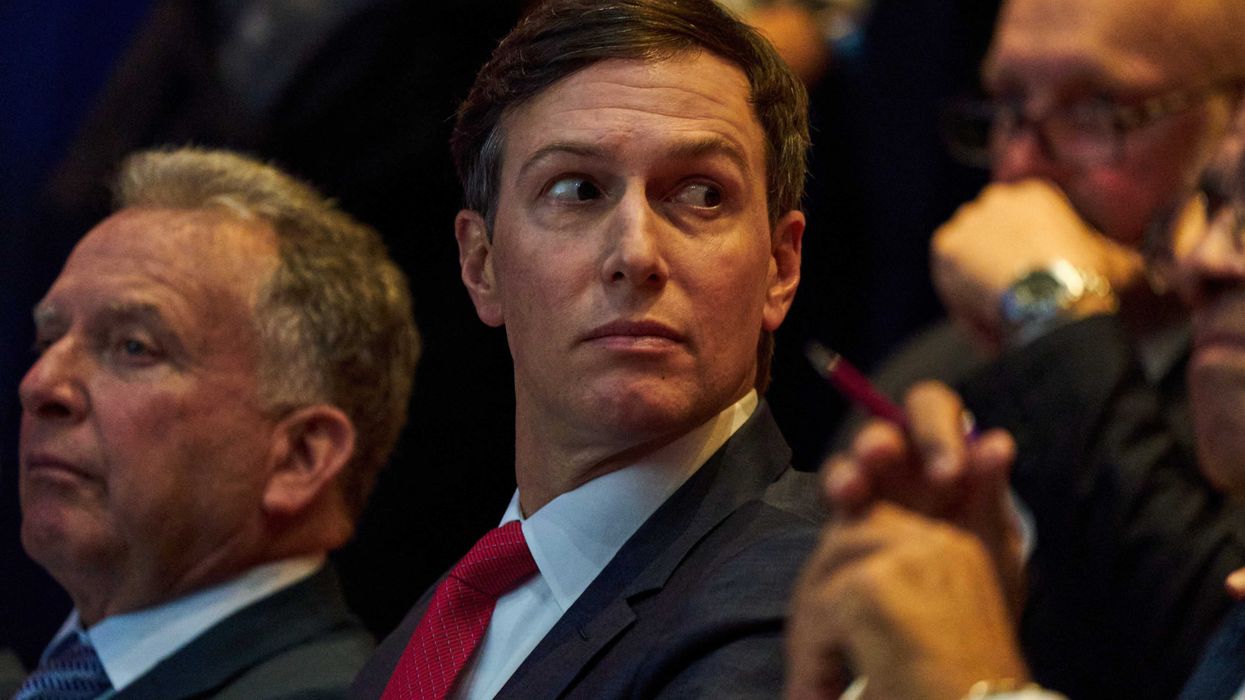
Observers were shocked Thursday after a new book excerpt detailed how foreign spies spent months peering into the phone of President Donald Trump's son-in-law.In an excerpt published by Vanity Fair from his upcoming book "Princes and Thieves," investigative reporter Matthew Cole lays out how Dutch military intelligence flipped a Russian GRU hacker in 2017 and used him to reach a Russian server holding screenshots from Jared Kushner's iPhone. By early 2018, according to Cole, the Dutch had cracked the device themselves and could watch Kushner's screen in real time.What they saw, Cole reports, was Kushner logging into a UAE bank account stocked with hundreds of millions of dollars routed through a bank in Azerbaijan. Cole's reporting alleges that the Saudi and Emirati royals ultimately put at least $2 billion into accounts tied to Kushner, including roughly $750 million at First Abu Dhabi Bank, where Kushner was allegedly a signatory on an account owned by an Emirati charity, and about $1 billion in Israel's Central Bank.A former Mueller prosecutor told Cole that Kushner may have run afoul of federal bribery and foreign agents laws if he promised anything in return. Kushner's lawyer denied any wrongdoing and insisted "there are no accounts and never were."Reaction online was swift."Every word of this is f------ insane," investigative journalist Scott Stedman fumed on X. "Kushner cannot be in charge of negotiations."Stedman followed up by arguing that, if the reporting holds, Cole "may have uncovered the biggest case of foreign bribery (MBZ and MBS of Kushner) in U.S. history."Drop Site News co-founder Ryan Grim marveled at the backstory. "Aside from the shocking substance of this story, what's amazing is how it was unearthed by Cole," he wrote.Former Rolling Stone editor-in-chief Noah Shachtman summed up the chain of events, noting that Dutch cyberspies reverse-engineered a Russian hack to gain "unprecedented access to his world." He called it a "bananas story."National security journalist Zach Dorfman hailed it as "astounding reporting," while reporter Erin Banco kept it short. "This is wild," she posted.
Explosive report claims Kushner’s hacked phone showed transfers to warlord and hitman
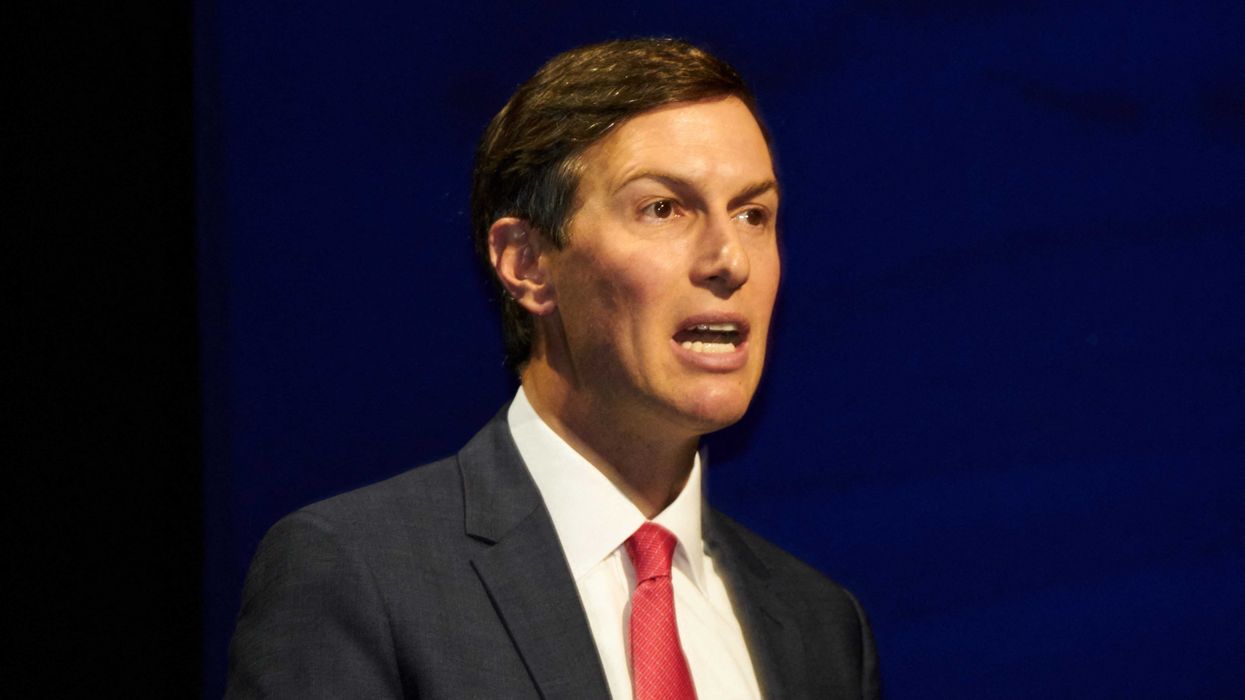
Jared Kushner allegedly accessed a secret Gulf-funded bank account while Dutch spies watched his phone, and moved money to a warlord, a mercenary and a one-time hit man, according to an explosive new book.In an excerpt published Thursday by Vanity Fair, investigative journalist Matthew Cole wrote that Dutch military intelligence found screenshots of Kushner’s iPhone on a Russian military intelligence server, then exploited a flaw in the phone to watch his screen themselves starting in early 2018.They saw Kushner, then a senior adviser to his father-in-law, President Donald Trump, log into a UAE bank account that had received hundreds of millions of dollars routed through Azerbaijan, according to “Princes and Thieves.” A source told Cole that Kushner appeared to transfer significant sums from the account to other individuals, including the warlord, mercenary and former hit man.Cole alleges the rulers of Saudi Arabia and the UAE put at least $2 billion into at least two accounts for Kushner during Trump’s first term.“Jared promised MBZ that he’d push their agenda with Trump if they participated in a fund,” one source told Cole, referring to UAE ruler Mohamed bin Zayed.Kushner’s ties to Gulf money have drawn scrutiny before. After leaving the White House, his private equity firm, Affinity Partners, received a $2 billion investment from a Saudi sovereign wealth fund led by Crown Prince Mohammed bin Salman, a deal that has drawn scrutiny from ethics watchdogs.The book cites mostly unnamed sources. Kushner’s lawyer told Cole that Kushner broke no laws and had no connection to any UAE account, adding that there “are no accounts and never were.”Kushner himself blasted the book on X.“The allegations made by this author are completely insane, categorically false, and never happened,” he wrote.
White House 'rattled' by Trump envoy's 'complicated' Putin praise blowback: report
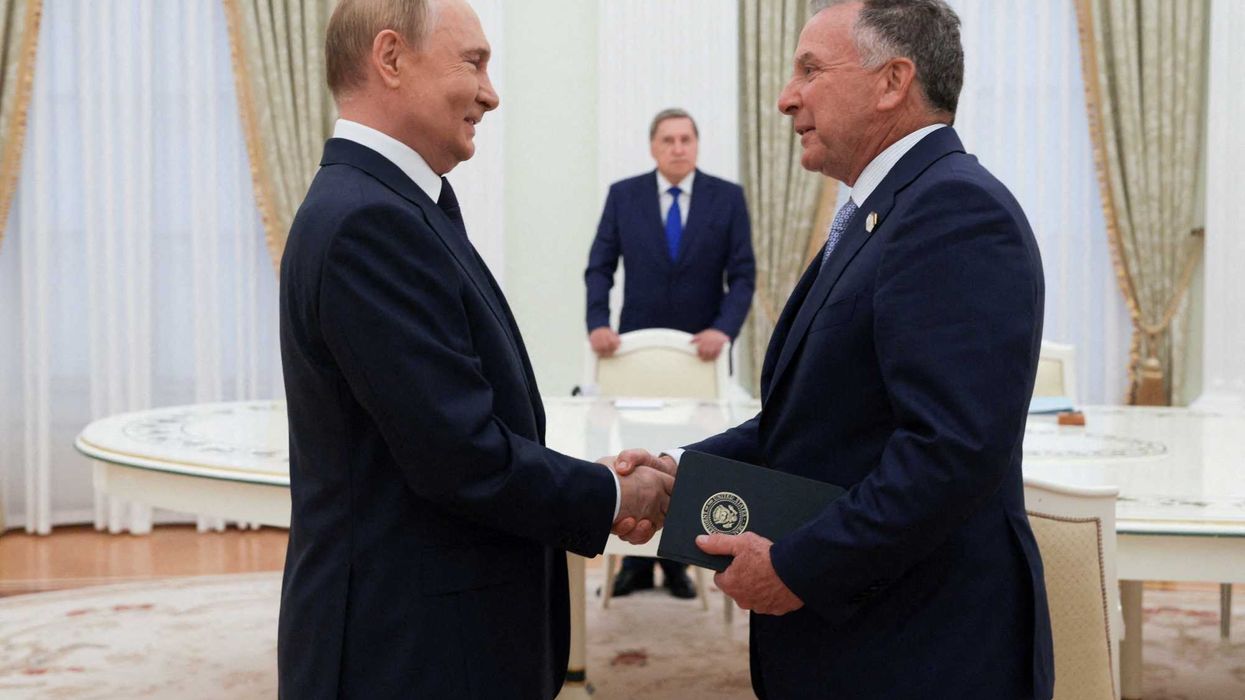
The White House’s rapid-response account pushed back on a former New York Post correspondent who criticized envoy Steve Witkoff’s praise of Russian President Vladimir Putin, according to the Daily Beast.Witkoff, President Donald Trump’s special envoy, told Putin during a Wednesday meeting, “You are a humanitarian also, sir, and I salute that, I commend you, and I thank you again.”The same day, Trump said Putin had freed Stephen Hubbard, a 74-year-old retired American teacher held in Russia since 2022, after a personal plea and without asking for anything in return.Reporter Caitlin Doornbos responded on X, according to the Daily Beast. “I’m used to diplomatic pandering by now, but this? ????” she wrote. She followed up: “For my Republican strategist friends — where the headlines could have been, ‘President Trump brings home American wrongly imprisoned in Russia’ - Witkoff calling Putin a ‘humanitarian’ will be the only thing anyone talks about.”The White House’s Rapid Response 47 account fired back, the Daily Beast reported. “Should the Special Envoy have insulted the man, imperiled the release of an American citizen, and torched any possibility of finally resolving a war that has gone on for far too long?” the account asked. “These things are complicated. This is why you’re not a negotiator.”The Daily Beast’s Leigh Kimmins wrote, “Someone in the Trump administration nerve center is rattled.”Doornbos later responded, "The White House tried to put me in my place. I was already in a bomb shelter in Kyiv."MS NOW host Joe Scarborough also weighed in after Witkoff shared a post about Hubbard’s release. “Stephen was kidnapped and abused for FOUR YEARS by the dictator you just called a humanitarian,” Scarborough wrote. “Putin kidnaps Americans, assassinates political rivals, kills journalists, murders toddlers, and kidnaps thousands of children. And you call him a humanitarian. There are no words.”The Wall Street Journal’s editorial board, writing about the release, said there is “no cause to be grateful” to Putin. The board called Witkoff’s praise a “rhetorical smooch.”The White House tried to put me in my place. I was already in a bomb shelter in Kyiv.Here’s what happened when I questioned Trump’s envoy calling Putin a “humanitarian” — and the response I got from the president’s own team. #ukraine https://t.co/n1veXqIOpy— Caitlin Doornbos (@CaitlinDoornbos) October 22, 2026